
Mastering School Readiness: A Brooklyn Preschool Guide for Confident Futures
The phrase "school readiness" often conjures images of toddlers reciting their ABCs or counting to twenty. While early academic exposure is valuable, true…
What Does “School Readiness” Really Mean for Brooklyn Families?
The phrase “school readiness” often conjures images of toddlers reciting their ABCs or counting to twenty. While early academic exposure is valuable, true school readiness for a Brooklyn preschooler encompasses a much broader spectrum of skills. It’s about nurturing a well-rounded child who is emotionally resilient, socially adept, physically capable, and cognitively curious, ready to thrive in a structured learning environment. For parents seeking the best start in Bed-Stuy and across Brooklyn, understanding this holistic view is the first step in preparing their child for kindergarten and beyond.
A child who is “school ready” isn’t just prepared to learn; they’re prepared to engage with learning, to interact positively with peers and teachers, and to navigate the daily routines of a classroom with confidence. This comprehensive approach ensures children don’t just survive school, but truly flourish.
Academic Foundations: More Than Just Rote Learning
While not the sole focus, foundational academic skills are certainly a component of school readiness. This isn’t about pushing advanced concepts, but rather about fostering a love for learning and introducing basic concepts in an age-appropriate, playful manner.
- Early Literacy: Recognizing letters, understanding that print carries meaning, enjoying stories, identifying rhyming words, and developing pre-writing skills (like holding a crayon correctly).
- Early Numeracy: Counting objects, recognizing numbers, understanding basic concepts like “more” and “less,” and engaging in simple sorting and patterning activities.
- Problem-Solving & Critical Thinking: Asking “why,” exploring cause and effect, and engaging in open-ended play that encourages creative solutions.
Social & Emotional Maturity: The Heart of Readiness
Perhaps the most critical, yet often overlooked, aspect of school readiness is a child’s social and emotional development. A child’s ability to manage their feelings, interact positively with others, and adapt to new situations directly impacts their success in a group setting.
- Self-Regulation: The ability to control impulses, manage frustration, and follow directions. This includes sitting still for short periods, waiting their turn, and transitioning between activities.
- Social Skills: Sharing, cooperating, empathy, resolving minor conflicts, and understanding social cues. These are crucial for building friendships and participating effectively in group activities.
- Independence: Being able to separate from parents with minimal distress, communicate needs, and ask for help when necessary.
- Confidence & Self-Esteem: A belief in their own abilities and a willingness to try new things, even if they might make mistakes.
Physical Development & Self-Help Skills: Building Independence
Beyond the classroom, a child’s physical capabilities and self-help skills significantly contribute to their readiness for school. These practical abilities empower children to navigate their day with greater independence.
- Fine Motor Skills: The dexterity needed for tasks like holding a pencil, using scissors, buttoning clothes, zipping zippers, and turning pages in a book.
- Gross Motor Skills: Coordination for running, jumping, climbing, balancing, and participating in active play. These skills are vital for recess and physical education.
- Self-Help Skills: Dressing themselves (or attempting to), using the bathroom independently, washing hands, cleaning up toys, and managing their own belongings.
Cognitive Skills & Problem Solving: Fueling Curiosity
Cognitive readiness involves a child’s ability to think, reason, and understand the world around them. It’s about developing curiosity and the tools to explore it.
- Attention & Focus: The ability to concentrate on a task or activity for an appropriate amount of time.
- Memory: Remembering instructions, routines, and previously learned information.
- Following Multi-Step Directions: Understanding and executing a sequence of commands.
- Categorization & Classification: Grouping objects by color, shape, size, or function.
Key Pillars of School Readiness: What Parents Can Do at Home
While choosing the right Brooklyn preschool is paramount, parents play a vital role in fostering school readiness at home. Everyday interactions and intentional activities can significantly boost a child’s confidence and capabilities.
Fostering Social-Emotional Intelligence
Emotional intelligence is a superpower for young children. By actively teaching and modeling these skills, parents can equip their children for success in any social setting.
Tips for Emotional Regulation
- Name Feelings: Help your child identify and verbalize their emotions (e.g., “I see you’re feeling frustrated because the blocks fell down”). This validates their feelings and builds their emotional vocabulary.
- Teach Coping Strategies: Suggest simple ways to manage big emotions, such as taking a deep breath, counting to five, or asking for a hug.
- Model Calmness: Children learn by observing. When you remain calm in stressful situations, you teach them how to respond.
Encouraging Social Interaction
- Organize Playdates: Provide opportunities for your child to interact with peers in a supervised, low-pressure environment. Guide them through sharing, taking turns, and resolving minor disagreements.
- Practice Sharing: Use toys at home to practice sharing and waiting for turns. “You can play with the truck for five minutes, then it’s my turn.”
- Role-Play Scenarios: Act out common social situations, like how to ask a friend to play or how to say “excuse me.”
Building Cognitive Skills Through Play
Play is a child’s work, and it’s the most effective way for them to develop critical cognitive skills. Make learning an adventure!
Hands-on Learning Activities
- Sensory Bins: Fill a bin with rice, beans, water, or sand, along with scoops, cups, and small toys. This promotes exploration, fine motor skills, and imaginative play.
- Building Blocks & Puzzles: These classic toys develop spatial reasoning, problem-solving, and hand-eye coordination. Encourage children to describe what they are building.
- Cooking Together: Following simple recipes teaches sequencing, measurement, and introduces new vocabulary.
Developing Early Literacy & Numeracy
- Read Aloud Daily: This is the single most important activity for early literacy. Point to words, ask questions about the story, and encourage your child to “read” familiar books.
- Letter & Number Games: Use magnetic letters, alphabet puzzles, or number matching games. Sing alphabet songs and count everyday objects.
- Storytelling: Encourage your child to make up their own stories or retell familiar ones. This boosts imagination, language skills, and sequencing.
Nurturing Physical Independence
A child who can navigate their physical world confidently is better prepared for the demands of a busy classroom.
Fine Motor Skill Activities
- Playdough & Clay: Squeezing, rolling, and shaping playdough strengthens hand muscles essential for writing.
- Scissor Practice: Supervised cutting activities with child-safe scissors help develop hand strength and coordination.
- Drawing & Coloring: Encourage creative expression while strengthening grip and control. Vary the writing tools – crayons, markers, chalk.
Gross Motor Skill Development
- Outdoor Play: Running, jumping, climbing, and riding a tricycle all contribute to gross motor development and coordination.
- Dancing & Movement Games: Follow-the-leader, freeze dance, or simply free movement to music helps with balance and body awareness.
- Obstacle Courses: Create simple obstacle courses using pillows, tunnels, and chairs to encourage crawling, climbing, and balancing.
Establishing Routines and Structure
Predictability provides security for young children. A consistent daily routine at home mirrors the structured environment they will encounter in preschool and kindergarten.
- Consistent Schedule: Establish regular times for waking up, meals, playtime, and bedtime.
- Clear Expectations: Clearly communicate rules and expectations, and follow through with consistent consequences.
- Chores & Responsibilities: Give your child age-appropriate tasks, like putting away toys or helping set the table. This fosters a sense of responsibility and contribution.
Choosing the Right Brooklyn Preschool for School Readiness
Selecting a preschool in Bed-Stuy or anywhere in Brooklyn is a significant decision. When “Brooklyn preschool school readiness” is your top priority, look for an environment that intentionally cultivates all the skills we’ve discussed.
Curriculum Focus: More Than Just Play
While play-based learning is crucial, a strong school readiness program integrates structured learning within that play. Look for a curriculum that explicitly addresses academic foundations, social-emotional growth, and physical development. Inquire about how they track progress and communicate it to parents. A program emphasizing hands-on STEAM (Science, Technology, Engineering, Arts, Math) learning, for example, intrinsically builds problem-solving, critical thinking, and fine motor skills.
Teacher-to-Child Ratios & Teacher Qualifications
Lower teacher-to-child ratios mean more individualized attention and support for each child. Highly qualified teachers, especially those with experience in early childhood development, are adept at identifying individual needs and tailoring activities to promote growth in all readiness areas. Ask about staff training in areas like positive behavior guidance and social-emotional learning.
Environment and Facilities
A stimulating, safe, and nurturing environment is essential. Look for classrooms that are bright, organized, and filled with age-appropriate learning materials. Outdoor play spaces are vital for gross motor development and fresh air. Consider the overall atmosphere – does it feel welcoming, engaging, and supportive? Is it clean and well-maintained?
Parent Communication & Involvement
A preschool that values strong parent-teacher partnerships is a strong indicator of a commitment to school readiness. Regular communication about your child’s progress, challenges, and successes is key. Look for opportunities for parents to be involved, whether through classroom volunteering, parent workshops, or informal feedback sessions.
Location and Convenience
For families in Bed-Stuy, Brooklyn, proximity to home or work is often a practical consideration. A convenient location, such as 260 Jefferson Ave, can significantly ease daily logistics, ensuring children arrive rested and ready to learn, and parents can easily participate in school events or pick-ups. Extended care options are also a huge benefit for working families, providing continuity and stability for the child’s routine.
Partner with Preschool of Business for Unparalleled School Readiness
Preparing your child for kindergarten is an exciting journey, and choosing the right Brooklyn preschool can make all the difference. At Preschool of Business, located conveniently at 260 Jefferson Ave in Bed-Stuy, Brooklyn, we are dedicated to providing an exceptional early childhood experience focused squarely on comprehensive school readiness.
Our full-time programs and extended care options are designed to support working families, offering a consistent and nurturing environment where children thrive. We build our unique curriculum on a foundation of hands-on STEAM learning, fostering curiosity, critical thinking, and problem-solving skills from an early age.
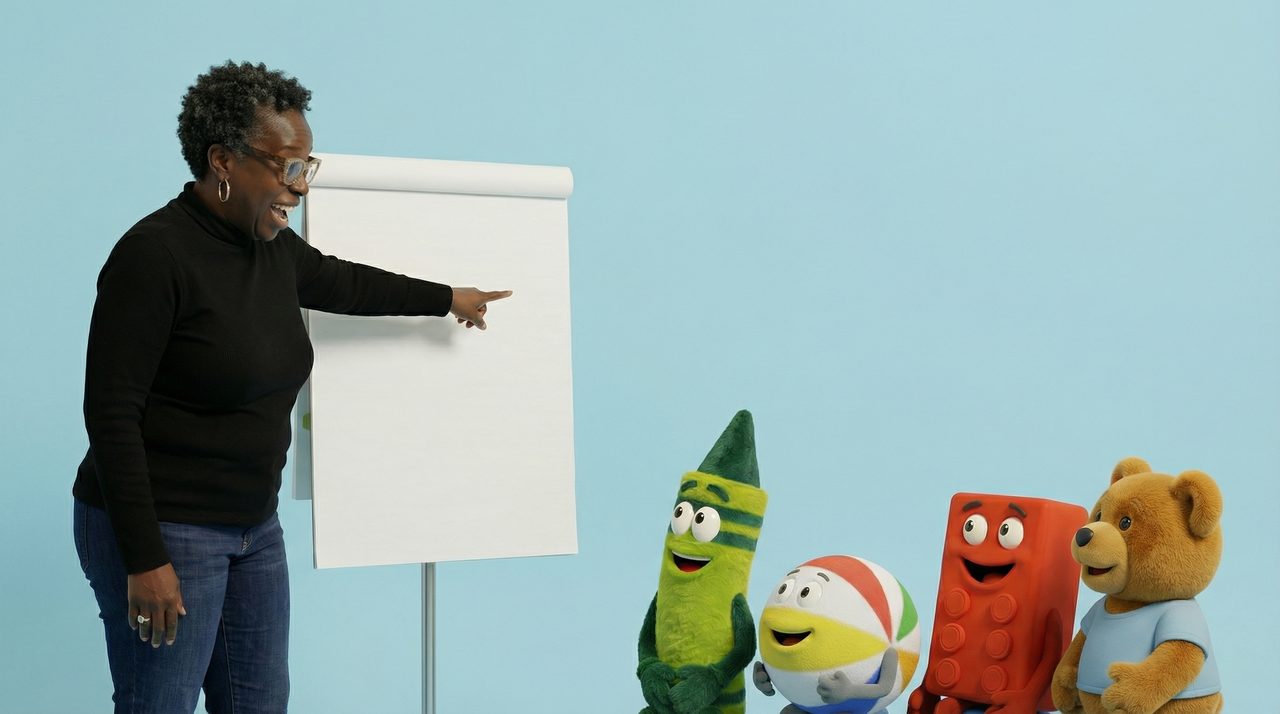
What truly sets us apart is our distinctive four-mascot curriculum framework, which intentionally addresses every facet of a child’s development:
- Block champions social development, teaching cooperation, sharing, and empathy.
- Bear focuses on physical development, enhancing both fine and gross motor skills.
- Beach Ball stimulates cognitive development, encouraging curiosity and early academic foundations.
- Crayon nurtures emotional development, building self-regulation, confidence, and resilience.
We believe in the power of structured daily routines to provide security and predictability, helping children develop independence and self-discipline. But don’t just take our word for it – our commitment to excellence and our comprehensive approach to school readiness have earned us 5-star reviews from delighted parents on Google.
If you’re searching for a Brooklyn preschool that goes above and beyond to prepare your child for a confident and successful future, we invite you to discover the difference at Preschool of Business. Visit our website or call us today to schedule a tour and see firsthand how we empower young learners to become school-ready leaders.